Shorty Lungkarta Tjungurrayi Pintupi, circa 1920-1987
-
 Mystery Sand Mosaic, 1974
 -
Tingarri Ceremony at Ilingawurngawurrnga, 1974
-
Classic Pintupi Water Dreaming [formerly Water Dreaming], 1972
-
Children’s Water Dreaming (Version 2) [formerly Water Story], 1972

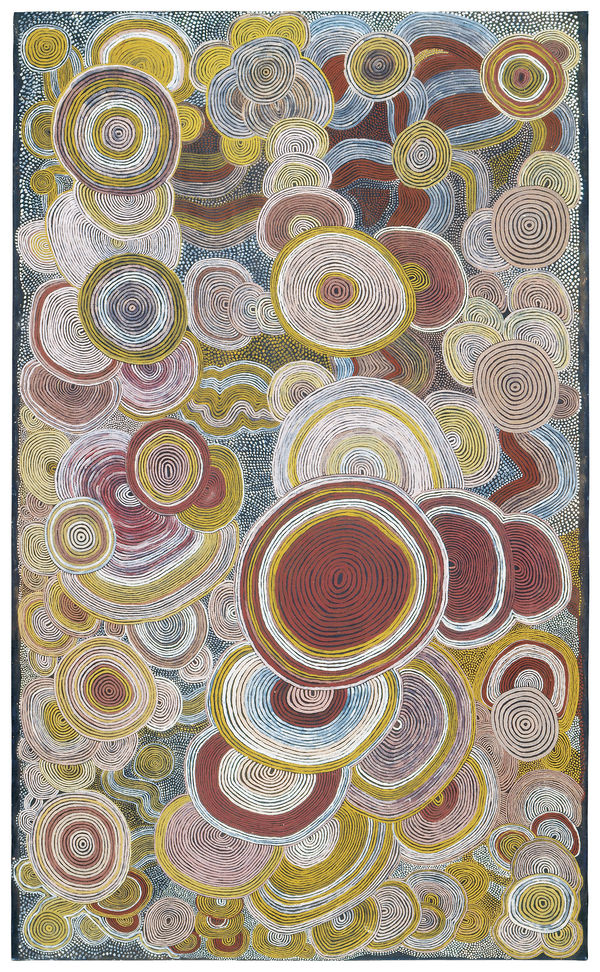
![Shorty Lungkarta Tjungurrayi, Classic Pintupi Water Dreaming [formerly Water Dreaming], 1972](https://static-assets.artlogic.net/w_600,c_limit,f_auto,fl_lossy,q_auto/ws-twocollections/usr/images/artworks/main_image/items/92/92b007ac9e424af4a354ea967baf27f1/cat25_sltjungurrayi.jpg)
![Shorty Lungkarta Tjungurrayi, Children’s Water Dreaming (Version 2) [formerly Water Story], 1972](https://static-assets.artlogic.net/w_600,c_limit,f_auto,fl_lossy,q_auto/ws-twocollections/usr/images/artworks/main_image/items/5f/5f1c4f9b70c7461588df97e635aeb974/cat24_sltjungurrayi.jpg)
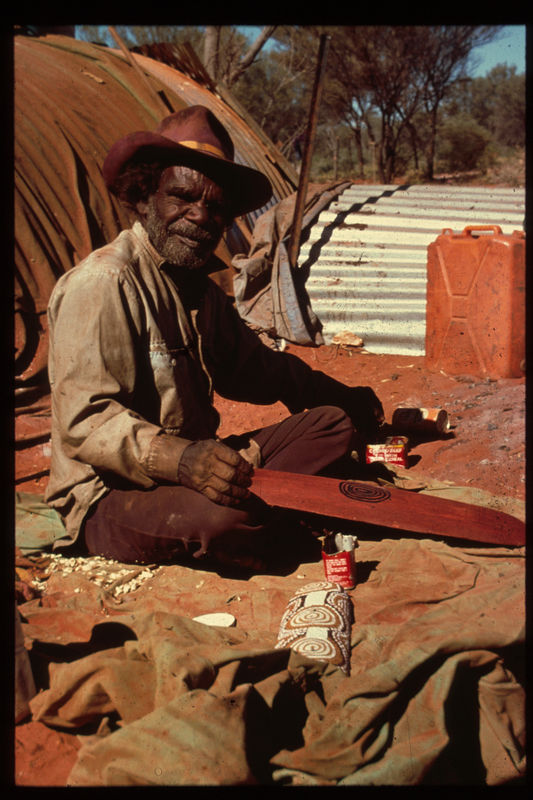
Lungkata began painting in the Australian summer of 1971–72. His paintings are intensely concentrated; their energies are contained and inwardly focused. From the mid-1970s, Lungkata’s works became increasingly elaborate. His paintings often featured multiple sets of looping crescents building from a steady centre. In some instances he employed subtle modulations of tone and colour to support the pulsing rhythm of a work. During this phase, he was the only Papunya Tula artist to begin his roundels with ovals rather than circles, giving his painting an attenuated, slightly convex feel. By the end of the decade, he was creating monumental, authoritative works that were comprehensive representations of the several Tjukurrpa that cross his traditional country. His greatest works were created when the market demand for Western Desert art had not yet been realised and, consequently, Lungkata’s significance as an artist should not be underestimated by the relative scarcity of his work.
John Kean in 'Tradition today: Indigenous art in Australia’, Art Gallery of New South Wales, Sydney, 2014